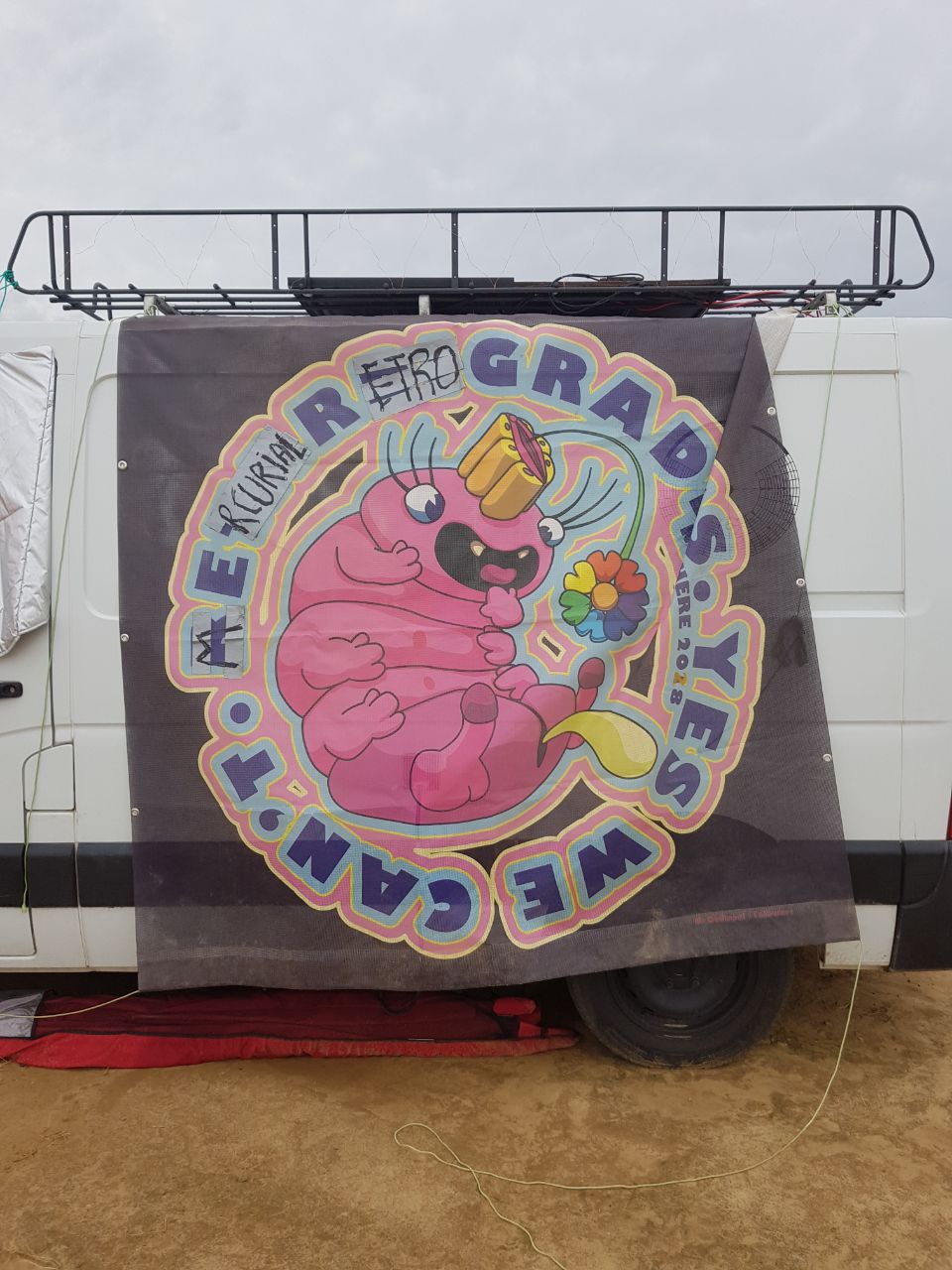
mercurial retrogrades
about us · join · workshops · setup · contact
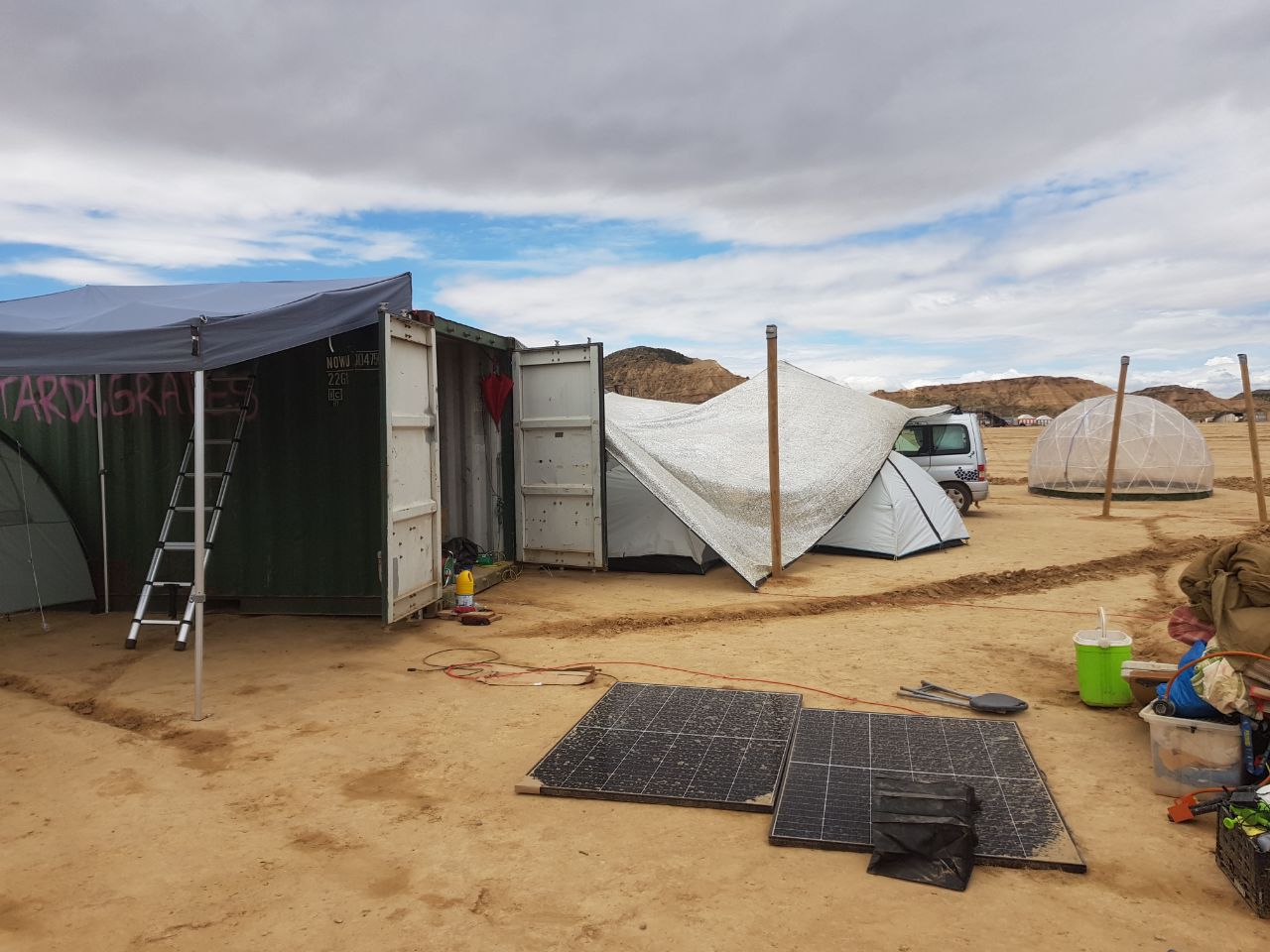
Taking stock, below is what we have – if you find anything missing and would like to change that, let us know!
structures
- 4× solar panels, in total producing about 5kWh
- 50% of a container in storage space
- 1× shower
- 1× water cube
- 2× fridges
- (soon) 1× small workshop tent
- 1× camp hang-out tent
- 1× large shade tarp
- some camping chairs and tables
(rough) timeline
- March to June: we collect camp members
- until July 1st: regular camp video calls, and chat in our Discord server
- July 1st to July 5th: build
- main event, daily:
- 1× warm vegan or vegetarian meal (non-veggie personal use of camp kitchen possible)
- camp meeting
- July 12th to July 14th: strike
roles, tasks, departments
For each of these sets of tasks, we need individuals to take responsibility as lead, possibly with sub-leads … But don't fret: Being lead of one of these doesn't mean you gotta do all that by yourself; it means you're to coordinate and ensure it happens with the help of everyone else! Everyone's expected to take shifts in multiple of these areas, but coming up with the shifts, their frequencies etc. in the first place – well, that's one of the jobs of a lead!
- build
- in advance:
- plan the camp layout
- recruit of build crew: collect individual commitments and organize early-entry permits for them
- plan the build work: who – what – when – how?
- assess what building materials/tools be needed, to be expected in storage, to be bought and brought
- on-site:
- in-person work coordination
- coordinate with barrio support
- ensure breaks and fluff and meals happen (build kitchen lead anyone?)
- on emptying container, check actual storage content against expectations, prepare storage suggestions for strike crew
- in advance:
- strike
- in advance:
- from build crew gather what's expected to be torn down
- plan the strike work: who – what – when – how?
- recruit strike crew: collect individual commitments to stay long enough, save some energy for the end
- research Norg expectations for barrio sign-out
- on-site:
- from build crew gather previous storage layout and how to do it better this time
- around end of event, mobilize to/hold strike preparation camp meeting
- in-person work coordination
- ensure breaks and fluff and meals happen (strike kitchen lead anyone?)
- container storage: record what's stored, where, to what condition
- assess what to get rid of rather than store, organize skip or off-site transport
- have camp do moop sweep
- handle barrio sign-off with Norg
- in advance:
- shopping
- in advance:
- make meal shopping plans with kitchen lead
- estimate shopping-specific camp expenses
- research nearby shopping opportunities
- recruit camp car, drivers
- on-site:
- collect individual "personal" shopping requests and payment commitments
- decide where to drive for which purchases
- make shopping trips happen
- resolve "personal" orders separate from camp expenses
- in advance:
- LNT
- in advance:
- research event LNT rules, prepare info materials for camp members
- communicate what-not-to-bring, help camp members source eco-friendly variants of e.g. hygiene products
- on-site:
- maintain waste separation discipline in camp by whatever means ethical or unethical
- ensure daily war zone runs
- in advance:
- welfare/fluff
- in advance:
- assess camp mebers' health and happiness needs, translate into actionables, accommodation plans, shopping lists …
- identify, ensure first-aid capabilities among camp mebers
- assess expected status of storage-located first-aid kit, budget and order necessary additions, replacements
- coordinate with shopping, build, strike crew what to buy in terms of work refreshments (plan fluff boxes?)
- on-site:
- ensure hard-work shifts are supported with frequent fluffing
- ensure fridge space for medication
- keep tabs on individual members' well-being, to intervene where appropriate
- enforce siesta discipline
- control, document, maintain first-aid kit as found in storage
- educate camp about broader welfare/malfare infrastructure, where to find red cross and what's okay to bother them with, and what camp members themselves might be of use in specific emergencies
- in advance:
- shint ninjaing
- in advance:
- research camp-assigned shit-ninja stations, duties
- coordinate with neighbour camps who's responsible when
- on-site:
- collect and communicate toilet-usage recommendations
- ensure camp's shit-ninja duties are done by camp members
- in advance:
- finance
- in advance:
- assess unresolved camp debts from previous years
- in communication with other departments plan camp budget
- organize money infrastructure (bank account? how to pay? paypal etc.?)
- determine target average camp fee, low-income options etc.
- transfer early refunds
- on-site:
- where necessary collect and refund cash
- keep tabs on development of actual expenses vs. planned budget, e.g. to assist in decisions on spontaneous investments
- post-event:
- transfer remaining refunds
- inform camp about debts to carry over into next year, or potential for next-year investments
- in advance:
- power/electricity
- in advance:
- assess:
- existing power setup (solar panels etc.), its capabilities and limitations
- consumers/demands present (e.g. our fridge(s)) and expected (new power-hungry infrastructure planned? members eager to bring hair dryers? …)
- determine needs for power infrastructure repairs/replacement/growth, expected costs, where to buy …
- assess:
- on-site:
- in coordination with build and strike departments, set-up/wind down power infrastructure
- after set-up keep an eye on power infrastructure, handle outages etc.
- keep camp members up-to-date on what's available, limitations, hacks like "avoid opening fridge if running from battery"
- in advance:
- workshops
- in advance:
- educate camp members about our workshop capacities (e.g. space), deadline and needed input (name, description of specific length …) for submissions to What Where When guide
- with build crew plan details of workshop space setup
- collect workshop submissions from camp members and in-time register them
- discuss with workshop submitters their specific needs in terms of e.g. assistance, materials, propaganda …
- on-site:
- set up workshop schedule board visible to passers-by
- together with build crew set up, and maintain workshop space
- ensure workshops happen, with promised support and materials etc.
- bully passers-by into joining under-populated workshops
- in advance:
- water
- in advance:
- order event-time water deliveries
- with build department plan setup of water cube, shower
- on-site:
- ensure water cube sufficiently clean before first filling
- help build/strike of water cube, shower
- maintain water cube usage discipline
- handle water deliveries, "pay" water trucks
- ensure proper waste water disposal
- in advance:
- onboarding
- in advance:
- interview (potential) new camp members, communicate camp structures and expectations to them
- prepare, maintain info materials on inner camp workings
- on-site:
- collect, welcome new arrivals
- help new camp members find their role inside the camp
- answer newbie questions about how anything in the camp works
- in advance:
- deco
- in advance:
- together with build department plan overall visual and haptic design of physical camp structures, light choreography, signage
- assess from records existing deco materials, budget and source new ones
- on-site:
- together with build and strike department realize deco concepts planned in advance
- in advance:
- kitchen
- in advance:
- …
- on-site:
- …
- in advance: